Hobart Reinforced Concrete Contractors
Call 00 000 0999Reinforced Concrete in Hobart
When your project needs extra strength and long term durability, reinforced concrete is the answer. Our reinforced concrete in Hobart combines steel reinforcement with quality concrete to resist heavy loads, movement and the stresses of Tasmania's changing climate. Our company uses reinforced concrete for driveways, slabs, retaining walls, footings and commercial structures, so you get a result that stays strong, safe and crack resistant long after the job is finished.
You can rely on us to place steel correctly, with proper cover, spacing and support, because that is what makes the difference between concrete that lasts and concrete that fails early. We work to your engineering plans and Australian Standards, and we are happy to explain our process in plain English. Our crew keeps your site safe and tidy from start to finish. Contact us today for a free quote.
Reinforced Concrete Services in Hobart
Reinforced Slabs and Floors
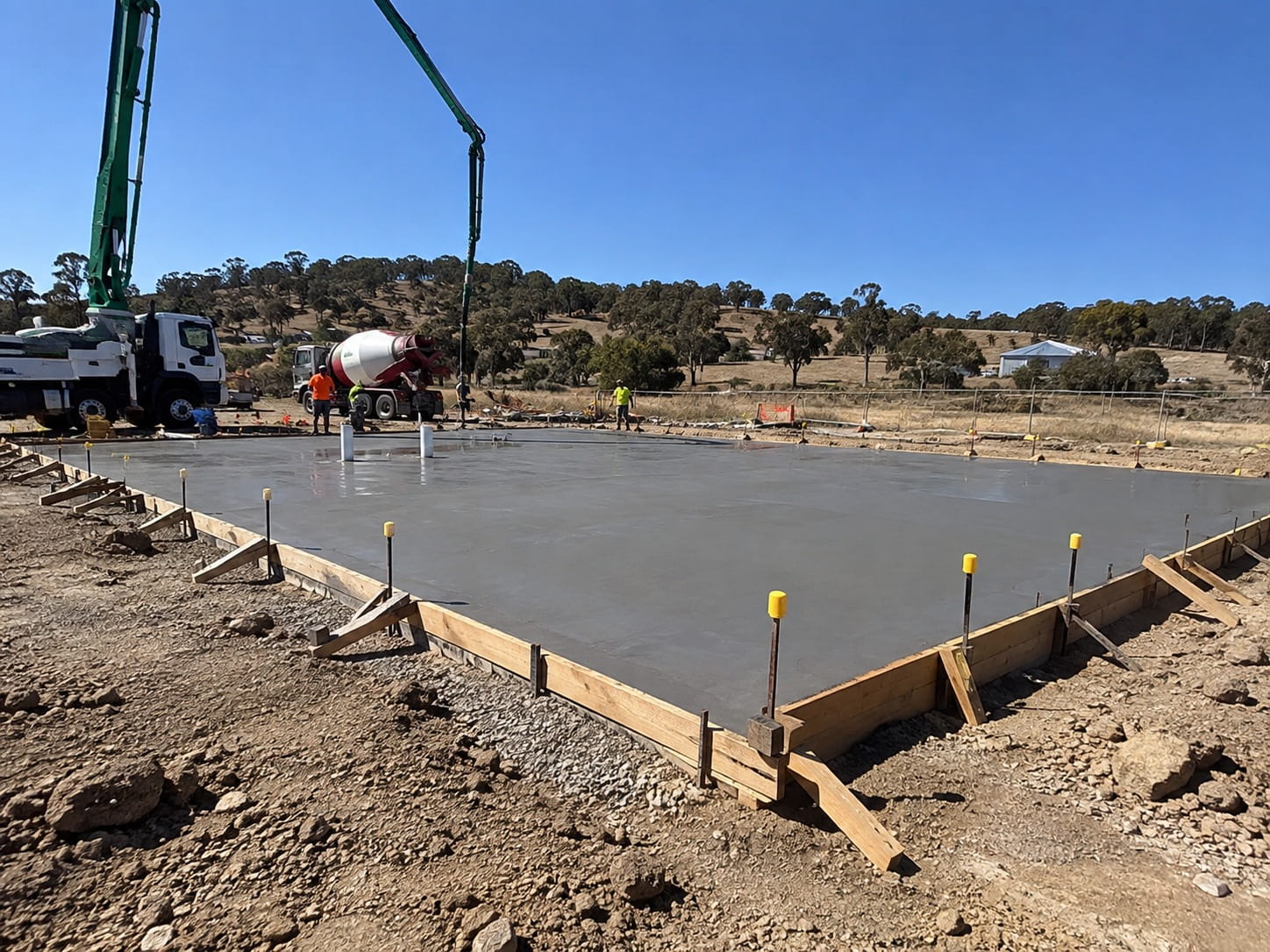
Steel mesh or bar reinforcement placed on chairs at the correct cover, so your floor resists cracking, carries heavier loads and keeps its shape over many years of use. Correct cover protects steel from moisture and corrosion for many years.
Reinforced Footings and Beams
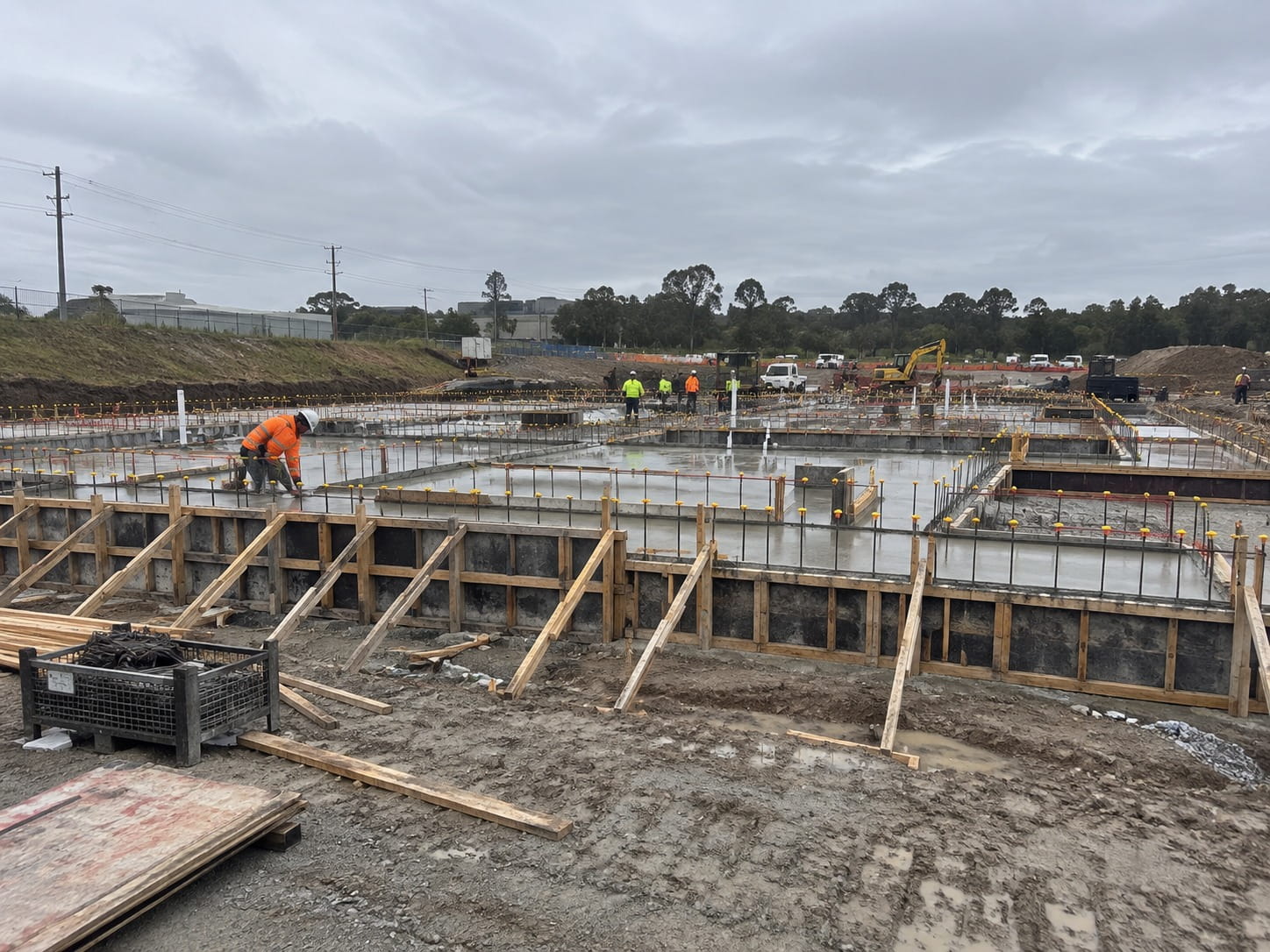
Strong foundations and edge beams with steel cages built to engineering plans, spreading loads safely into the ground on both flat and sloping Hobart sites. Cages are tied and checked before the pour so your engineer can sign off confidently.
Reinforced Retaining Walls
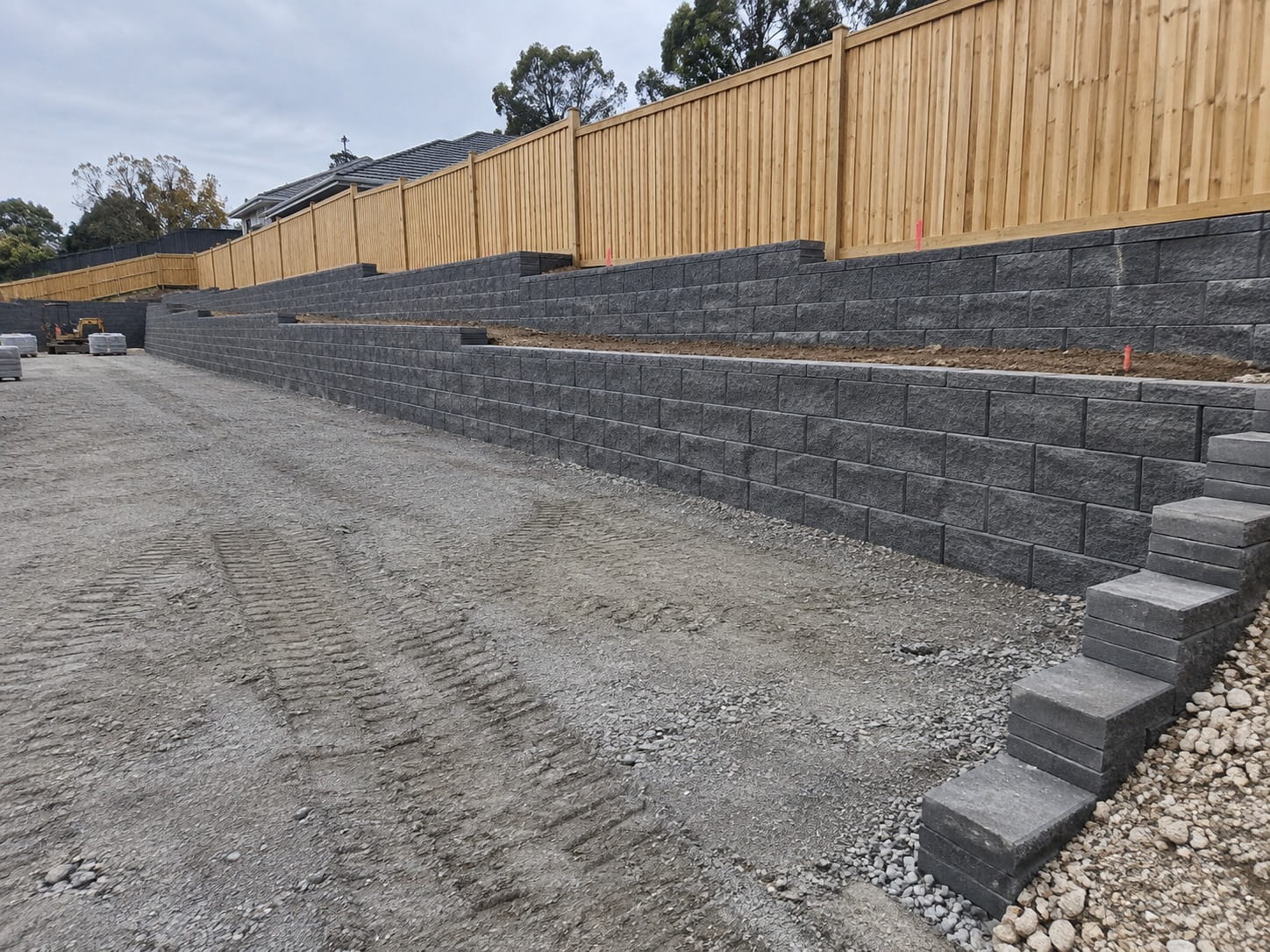
Walls with vertical and horizontal steel that resist the pressure of soil and water behind them, giving you a strong, stable structure on steep Tasmanian blocks. Drainage and well compacted backfill work alongside the steel to keep the structure stable.
Heavy Vehicle Pavements
Thicker, heavily reinforced driveways and hardstand for trucks, machinery and caravans, designed so wheel loads spread through the slab instead of breaking the edges. We choose mesh, bar size and thickness for your heaviest vehicle, so the slab lasts longer.
Steel Placement and Cover
Bars, mesh and ties positioned with correct spacing and concrete cover to protect against corrosion and keep the structure sound, particularly where moisture and salt air are present. Reinforcement is checked against the drawings before concrete arrives, which avoids mistakes.
Engineered Concrete Projects
Specialised reinforced elements, from suspended slabs to walls and columns, built to engineering drawings and coordinated with your builder so inspection and pour days run smoothly. We work with builder and engineer so every pour is inspected and signed off.

Reinforced Concrete Contractors Hobart: 3 Ways To Get Started
When strength matters, reinforced concrete is the right choice. Our Hobart team can help you decide how much steel, thickness and support your project needs before work starts.
- Send the plans: Share engineering drawings or tell us what the slab, wall or footing must carry.
- Book a site visit: We assess ground, access and drainage so reinforcement is placed correctly on day one.
- Request a written quote: See clear pricing for steel, concrete, labour and inspections up front.
However you begin, you will deal directly with experienced concreters who understand how steel and concrete work together. We follow your engineering plans, check cover and spacing carefully and keep your site safe throughout. Steel is checked before every pour. Contact our Hobart team today for a free quote and clear advice.
Why Choose Our Hobart Reinforced Concrete Experts
Proper Cover On Every Face
When reinforcing rusts it swells and splits the concrete around it. Keeping the specified depth of concrete over the steel on every side, including at edges and set-downs, is the detail we never cut corners on.
Reinforcement Sits Where It Works
Mesh resting flat on the ground adds very little strength. We support it on chairs at the correct height within the slab and keep checking it hasn't been trodden down as the concrete goes in.
Built Exactly To The Drawings
Spacing, lap lengths and tie locations are set by the engineer for good reason. We follow the specification and the relevant Australian Standards, and welcome an inspection by your engineer or certifier before we pour.
Reinforced For Actual Use
A slab under a small hatchback and one carrying a loaded ute or delivery truck need different reinforcing. We ask how the surface will really be used and specify the steel to suit those loads.
Soil Checked Before Steel Is Chosen
How much reinforcing a slab needs depends on how much the ground underneath moves. We assess the soil type, slope and drainage during our site visit and build those findings into the specification.
Steel Costed On Its Own Line
Reinforcement makes up a real share of the price of a structural pour, so we show it separately. You'll know exactly what's going into the slab rather than finding it lost in a lump sum.
Concrete Works in Hobart


Reinforced Concrete FAQs
Common questions about reinforced concrete in Hobart — whether a driveway needs steel, mesh versus rebar, why cover matters near the coast, and working to engineers' drawings.
In Hobart, in almost every case yes. Reinforcement doesn't stop concrete cracking — concrete always cracks somewhere — but it holds the slab together across those cracks so they stay hairline instead of opening up and letting the two sides move independently. Over reactive clay that shifts through the year, and under the weight of cars, utes and the odd delivery truck, an unreinforced driveway will separate at the cracks and start settling unevenly within a few seasons. The steel is a small part of the total cost and one of the biggest factors in how long the surface lasts.
Mesh is a prefabricated grid of relatively light wire, delivered in sheets and lapped together on site. It suits slabs and driveways where the load is spread across the surface. Rebar is individual heavier bar, cut, bent and tied into a cage on site, and it goes where loads concentrate — footings, retaining walls, thickened edges and structural elements. Plenty of jobs use both: mesh through the body of a slab and rebar through the edges and any structural sections. The engineer's drawing determines which goes where, and both need to be chaired up to sit at the right depth.
Cover is the depth of concrete between the steel and the outside air, and it's the main thing protecting the reinforcement. In suburbs along the Derwent and the coast, airborne salt gradually penetrates concrete, and once enough reaches the steel, it corrodes. Corroding steel expands to several times its original volume, cracking and spalling the concrete from the inside. You see it as rust staining and flaking, usually along edges where cover is thinnest. AS 3600 sets minimum cover according to the exposure conditions, and getting it right at the outset is far cheaper than any repair afterwards.
Not in any meaningful structural sense — reinforcement has to be in place before the pour, because it needs to be surrounded by concrete to work at all. What can be done with an existing slab is different: cutting in control joints to manage where it cracks, injecting epoxy into structural cracks to bond the two faces back together, or adding a bonded overlay to restore the surface. If a slab has failed because it was never reinforced properly, though, the honest answer is usually replacement rather than repair, and we'll tell you if that's where things stand.
Yes, routinely, and for anything structural we'd expect drawings to exist. We build to the specified bar sizes, spacing, laps and cover, and we're comfortable with the steel being inspected by the engineer or building surveyor before concrete goes in — that inspection protects you as much as anyone. If we see something on site that doesn't match the drawing, or ground conditions that look different from what the soil report described, such as unexpected rock or soft fill, we stop and raise it before pouring rather than afterwards.
Other services you might need
Want a quote within 24 hours?
Send us the drawings or just the address, and we will price it properly.